


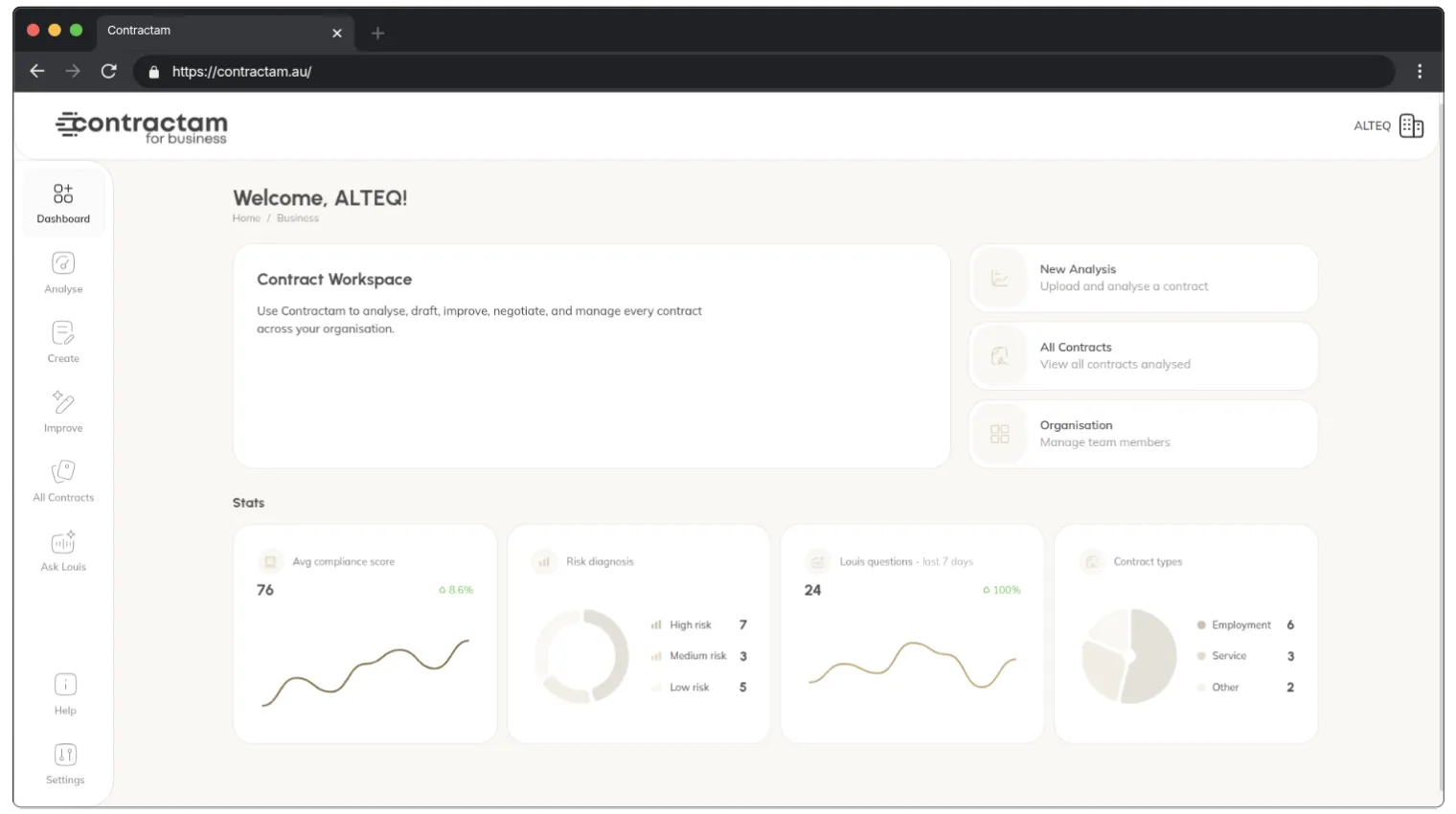
Understand every contract in minutes.
Stop guessing what the legal jargon means. Upload supplier agreements, leases, or NDAs, and let Australian AI translate complex clauses into clear business risks.
Most contracts come back in minutes.
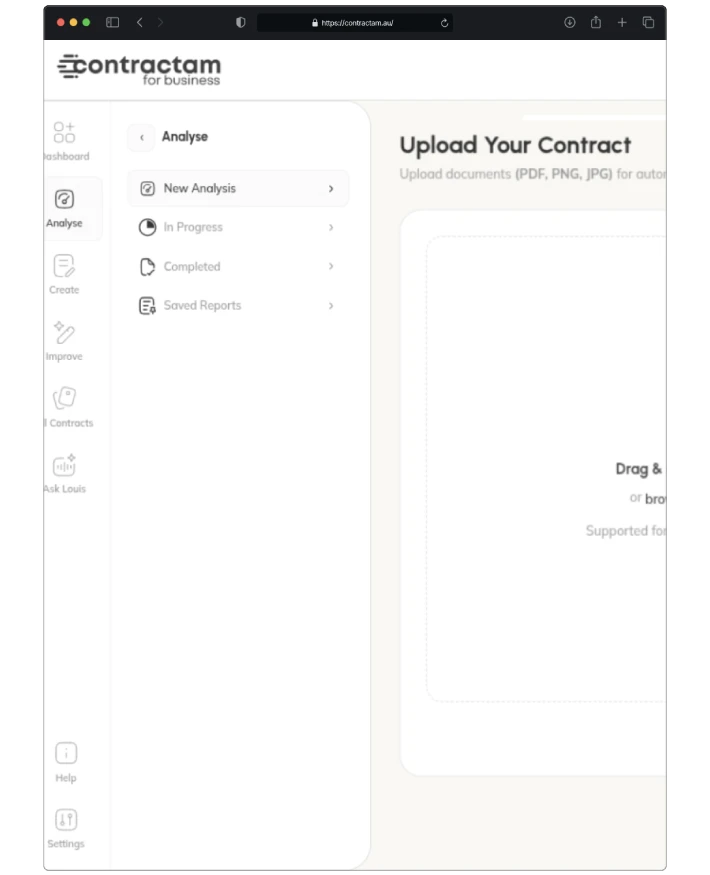
Upload it.
That's your part done.
No forms, no legal knowledge, nothing to configure. The engine works out what kind of contract it is and which law applies.
It works out the rest
PDF or Word, exactly as it is
Sign the same contract in Perth as a sole trader and the national rules that cover Sydney don't apply
Louis, your AI contract assistant, emails you the moment it's ready
A clause either meets
the law, or it doesn't.
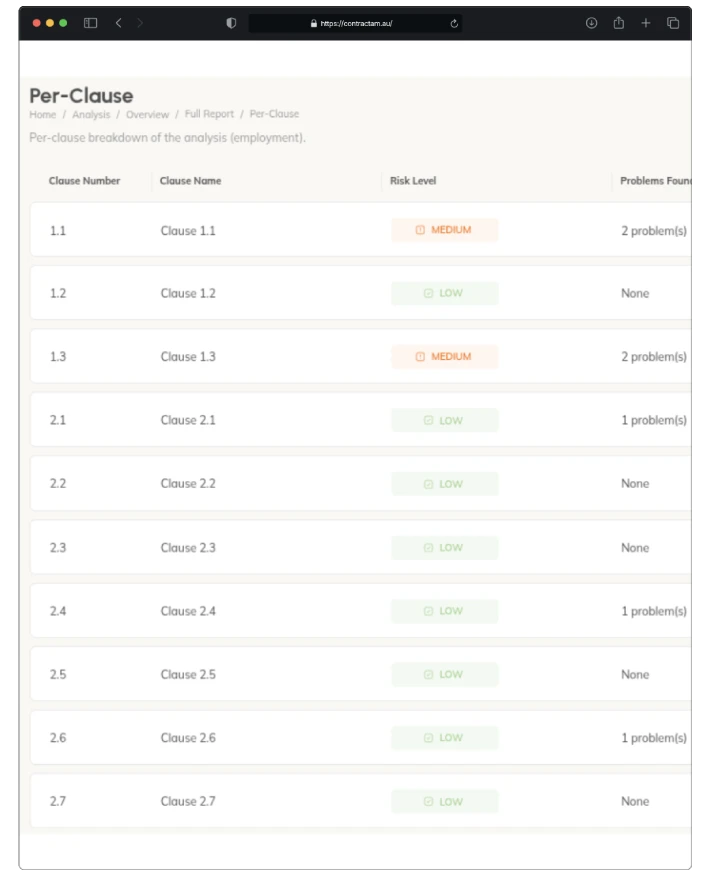
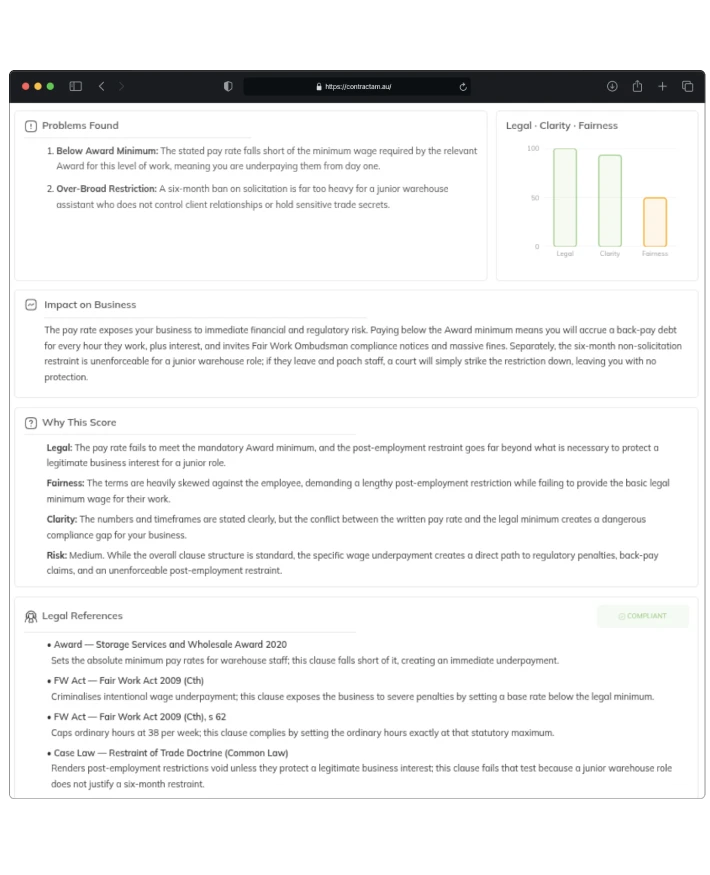
Every clause is checked against the Act that applies to that document, as it stands today. Anything below the legal minimum is flagged, with the reason in plain English.
Pass or fail, clause by clause
Employment contracts against the Fair Work Act 2009 (Cth), the National Employment Standards and the Modern Award that covers the role
Supplier terms against the Australian Consumer Law, where an unfair term now carries penalties up to $100m
Leases against the Act in that state - eight separate regimes, and Tasmania's 2022 one has never commenced
See what's missing
before someone else finds it.
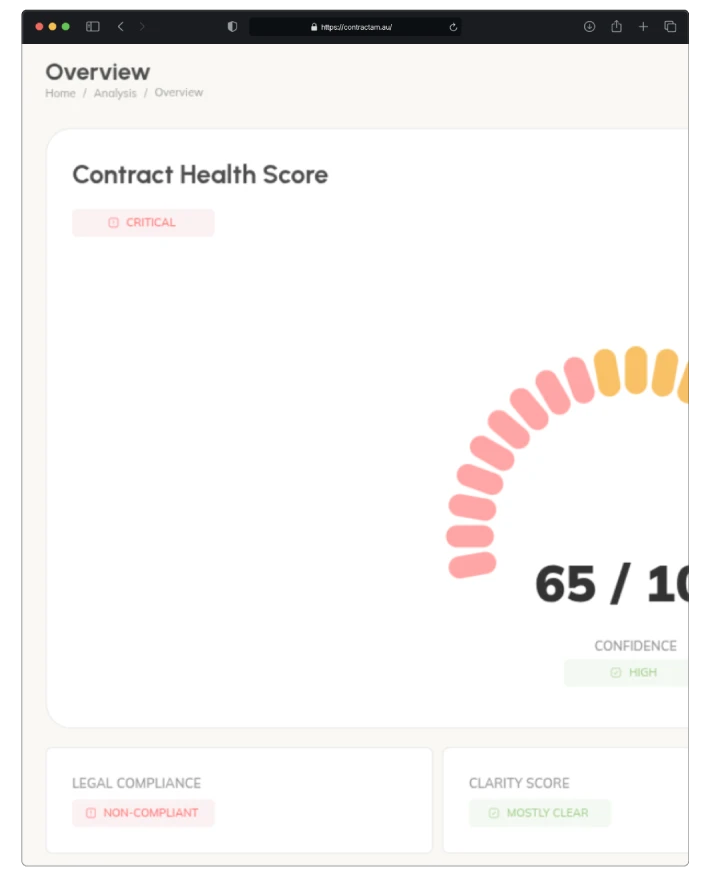
Meeting the legal minimum is not the same as being protected. Absent and weak protections are named and ranked by what they would actually cost you.
Ranked, not just listed
A restraint with no time or distance limit, which a court can refuse to enforce
Confidentiality that stops the day the person leaves, when that is when it matters most
No clause assigning the work a contractor produced, so by default they still own it
Legal isn't the same
as fair.
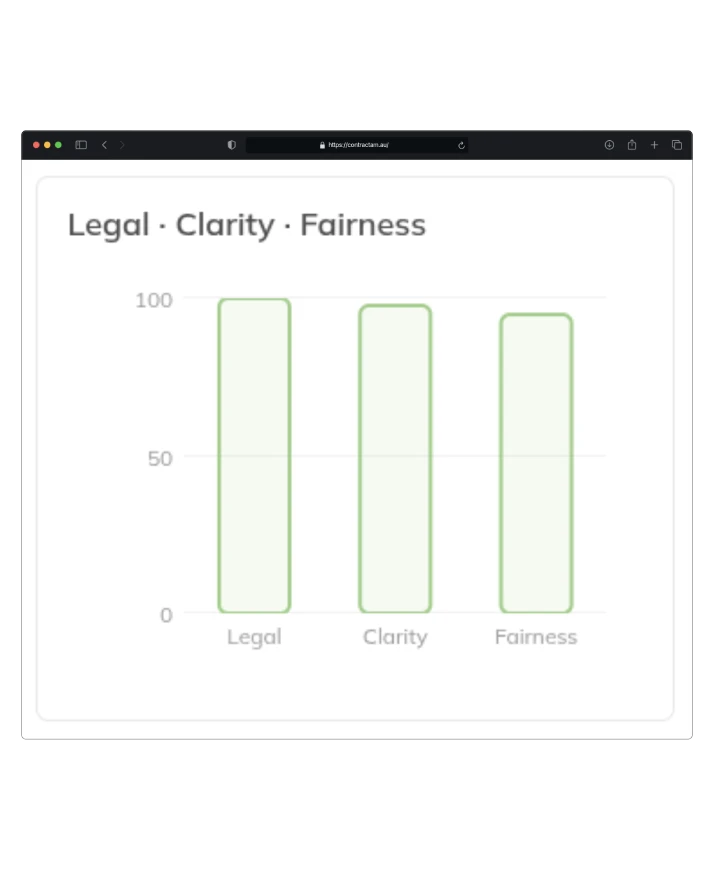
Fairness and clarity are scored separately, because an unfair term in a standard-form contract now carries its own penalty. The person on the other side still has to sign it.
Three scores on every clause
Fairness scored 0–100, with one-sided terms named where they sit
Clarity scored 0–100, so you can see which clauses get queried
Each unfair term is a separate contravention - proposing it, applying it and relying on it all count
Every clause,
explained.
What it means, why it is there, and what changes if you take it out. Written for the person signing it off, not for someone who already knows the law.
No legal reading required
What the clause actually says, in a sentence
Why it is in there, and what you give up by removing it
Ask Louis anything about your own contract - and he will tell you when it needs a lawyer
Before you upload anything
The questions people actually ask before they run their first contract through - answered straight, without the legal hedging.
-
We've been using the same contract for years. Is that actually a problem?
It depends entirely on what's changed since it was written, which is what the review tells you. Contracts don't expire, but the law underneath them moves - a clause that was compliant when it was drafted can sit below the minimum today without anyone touching the document.
-
Our contract was written by a lawyer. What would this find?
Often nothing on compliance, and that's a useful answer to have in writing. What it usually surfaces is drift - the version that's been edited a few times since, or a clause that was right for the business three years ago and isn't now.
-
It's flagged a clause as non-compliant. What do I do with that?
You get told which legal minimum the clause falls short of and why, in plain English. What you do next is your call - you can take it to your lawyer with the specific problem already identified, or use Contract Improvement to rewrite it.
-
Can the person I'm sending the contract to see any of this?
No. The analysis is yours. Nothing is sent to the other party, and nothing appears on the contract itself.
-
What happens to my contract after I upload it?
It stays yours. It's stored against your account so you can come back to the report, it isn't shared with anyone, and it isn't used to train AI models.
Can’t find the answer to your question?
Contact us and we’ll get back to you as soon as we can.