


Keep the contract.
Fix what's wrong with it.
The agreements you already use, intelligently improved clause by clause against Australian standards. The AI suggests the revisions, but nothing changes until you approve it.
Check and fix a contractYour contract back as an editable Word file.
Upload the contract
you've already got.
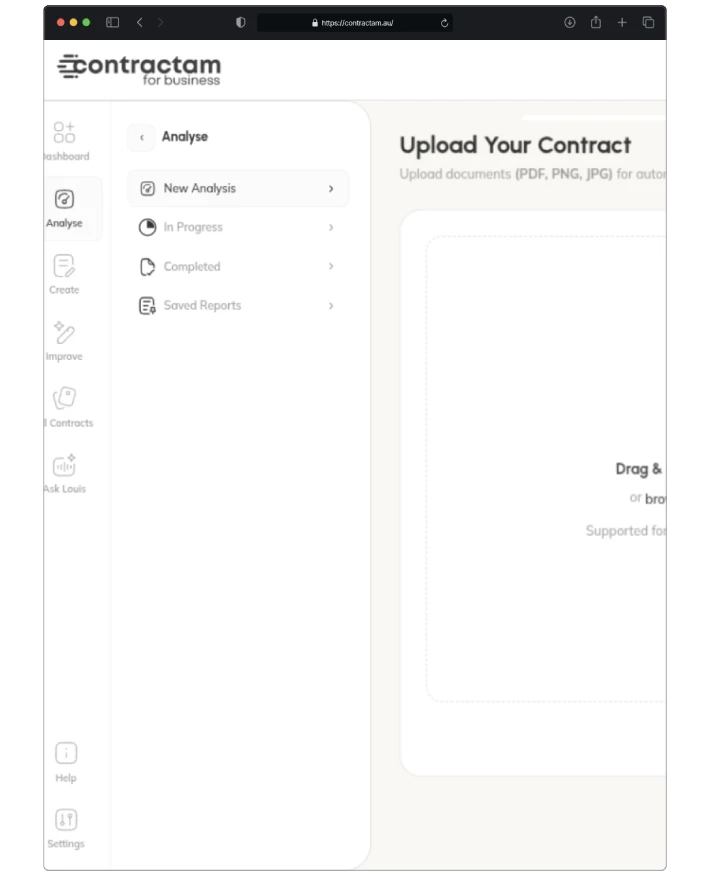
No forms, no clause tagging, no legal knowledge. Drop in the contract you already send and the engine works out what kind of document it is and which Act applies to it.
Nothing to prepare
The contract you already use - Not a template and not a sample. The PDF or Word file sitting in your folder is the one it reads, schedules and annexures included.
It works out which law applies - A shop lease in Brisbane is read against the Queensland Act, not the New South Wales one. You don't have to tell it where you are.
Nothing changes until you say so - The improved version is built beside the original. You see every change before a single word moves.
It reads the clauses
you never do.
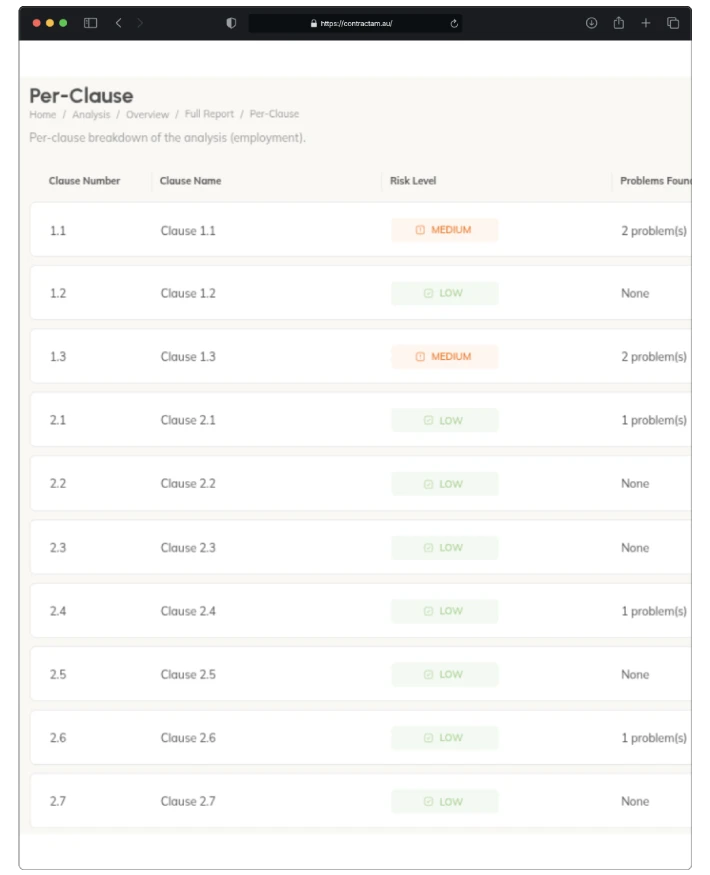
Improvement starts with a full audit. Every clause is checked against the Act that governs the document, and everything falling short is listed before a single word is changed.
Worst first, in plain English
Below the legal floor - Clauses sitting under the legal minimum are flagged first, with the minimum they miss named in a sentence.
Present, but too loose to rely on - A restraint with no time or distance limit reads like protection and isn't. Vague clauses are separated from missing ones.
Not there at all - No assignment of the work a contractor produced. No confidentiality that survives their exit. Absent protections are named, not assumed.
The engine rewrites it.
You decide what stays.
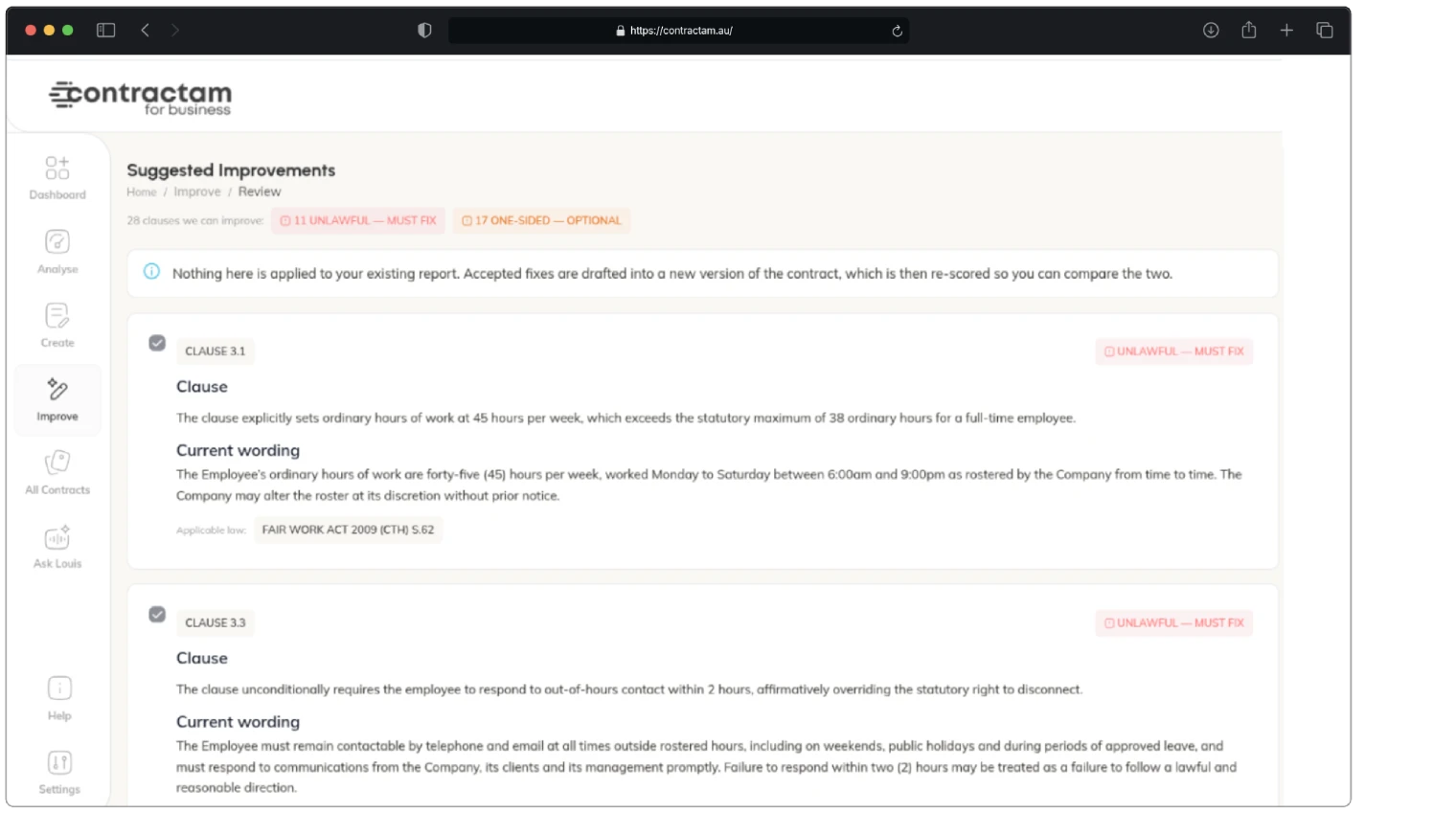
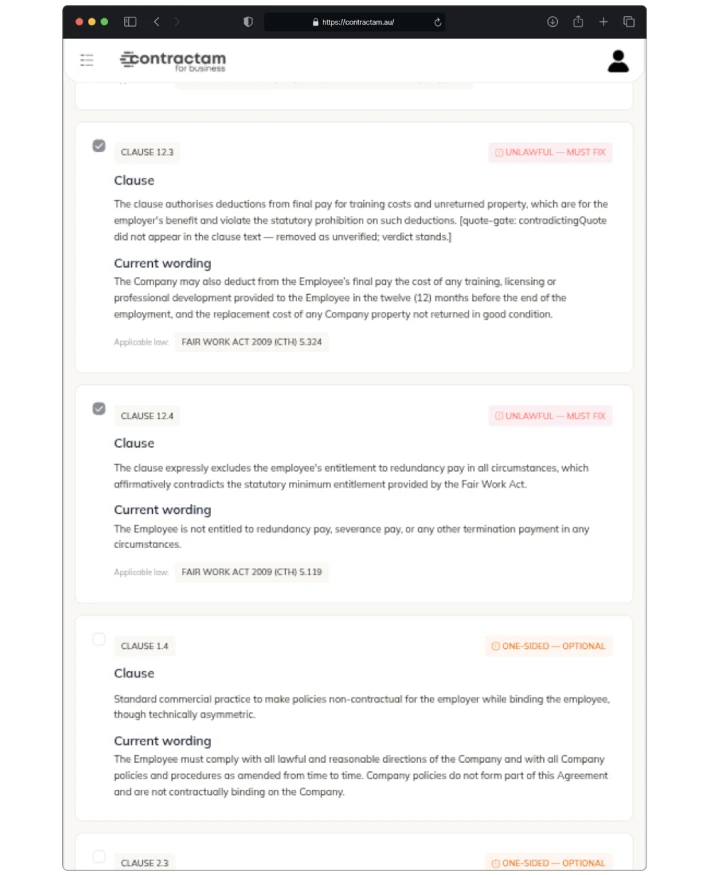
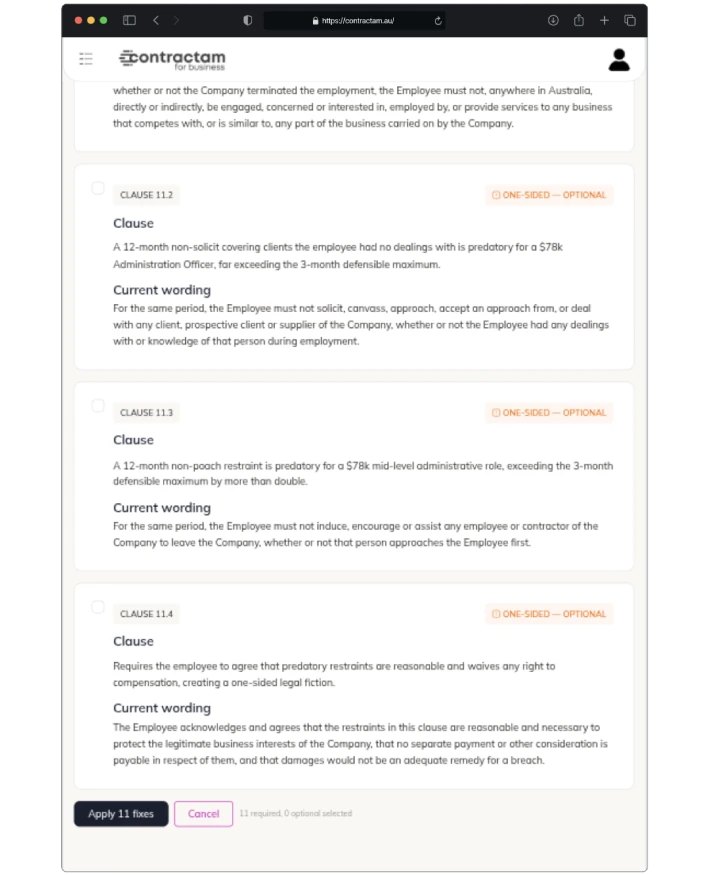
Every clause that failed comes back rewritten, sitting beside the original. Nothing is applied on its own - you accept each change, or leave the clause exactly as it was.
Before and after, side by side
The rewritten clause, next to the original - You read both. The change is marked and the reason for it is written underneath in plain English.
A restraint comes back as a step-down version - Shorter term, smaller area, drafted to be defensible instead of being struck out entirely.
Accept it, or don't - Take every change, take some, take none. The contract only moves when you say so.
What wasn't there
gets written in.
Finding a missing protection doesn't help much if you then have to draft it yourself. Anything absent is written into the contract in full, in wording that matches the rest of the document.
Written in, not just flagged
Ownership of the work - A contractor keeps copyright in what they produce unless the contract assigns it. Where that clause is missing, it gets written in.
Confidentiality that outlasts the person - Obligations that stop the day someone leaves are extended to cover the period where the information still matters.
It still reads like your contract - New clauses follow the numbering and defined terms already in the document, so nothing looks bolted on.
Stronger for you.
Still fair enough to sign.
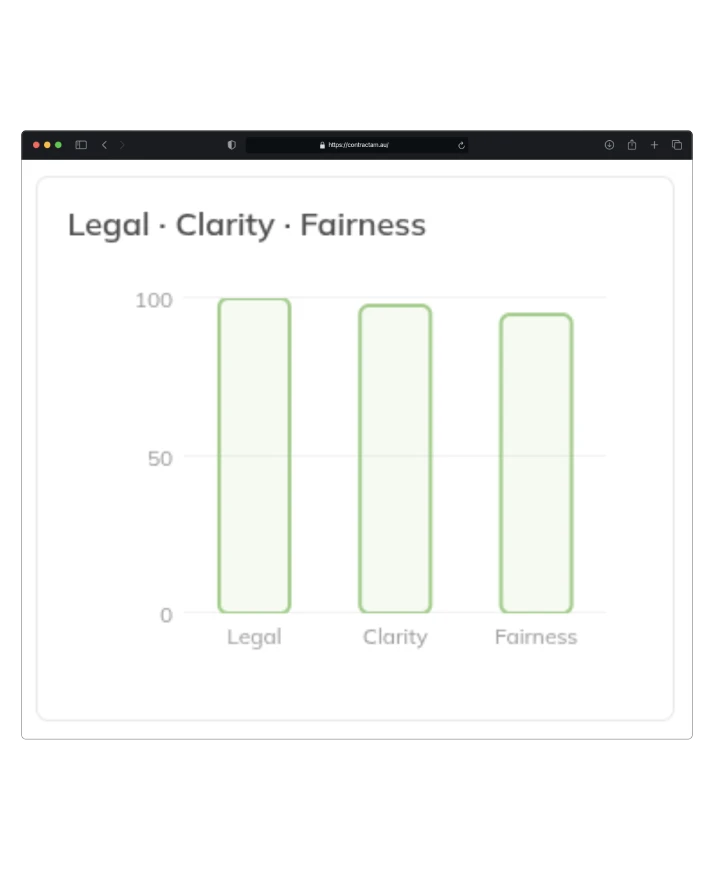
A contract tightened only in your favour is a contract people hesitate over. Under the Australian Consumer Law, an unfair term in a standard-form contract now carries its own penalty. Every change is scored again before it reaches you.
Re-scored, not just rewritten
Every rewrite is checked again - The engine self-audits up to three times, so a change that tips the contract too far one way never reaches you.
Nothing unfair gets added to close a gap - In a standard-form contract each unfair term is a separate contravention: proposing it, applying it and relying on it.
Clarity goes up, not down - Wording nobody can follow is what makes people stop and push back. Every rewrite is scored on whether the other side can read it.
Before you let it change anything
The questions people ask before handing over a contract they have been relying on for years.
-
Our contract was written by a lawyer. Is this going to wreck it?
It can't, because nothing is applied unless you accept it. What usually comes back on a lawyer-drafted contract isn't a rebuild - it's drift. The clauses that were edited since, and the ones written before the law underneath them moved.
-
How is this different from running the analysis?
Analysis tells you what's wrong. Improvement writes the fix and puts it beside the original. If you only want to know where you stand, run the analysis - Improvement is for when you've already decided to change the document.
-
Can I keep some clauses exactly as they are?
Yes. Changes are accepted one at a time. Some terms are meant to be firm, and some wording is in there for reasons the document doesn't explain, so nothing moves unless you move it.
-
We've got everyone on the same contract. Does fixing it mean re-signing all of them?
Not usually, and not all at once. Anyone you hire after you accept the changes gets the improved version straight away. For people already on the old one, changing terms generally needs their agreement, so most businesses roll it out at the next review or when something else is changing anyway. The before-and-after report shows exactly which clauses moved, which is what that conversation needs.
-
What do I actually get back at the end?
The improved contract as an editable Word file, plus a before-and-after report showing every change and the reason for it. You can hand both to your lawyer if you want a second read.
Can’t find the answer to your question?
Contact us and we’ll get back to you as soon as we can.